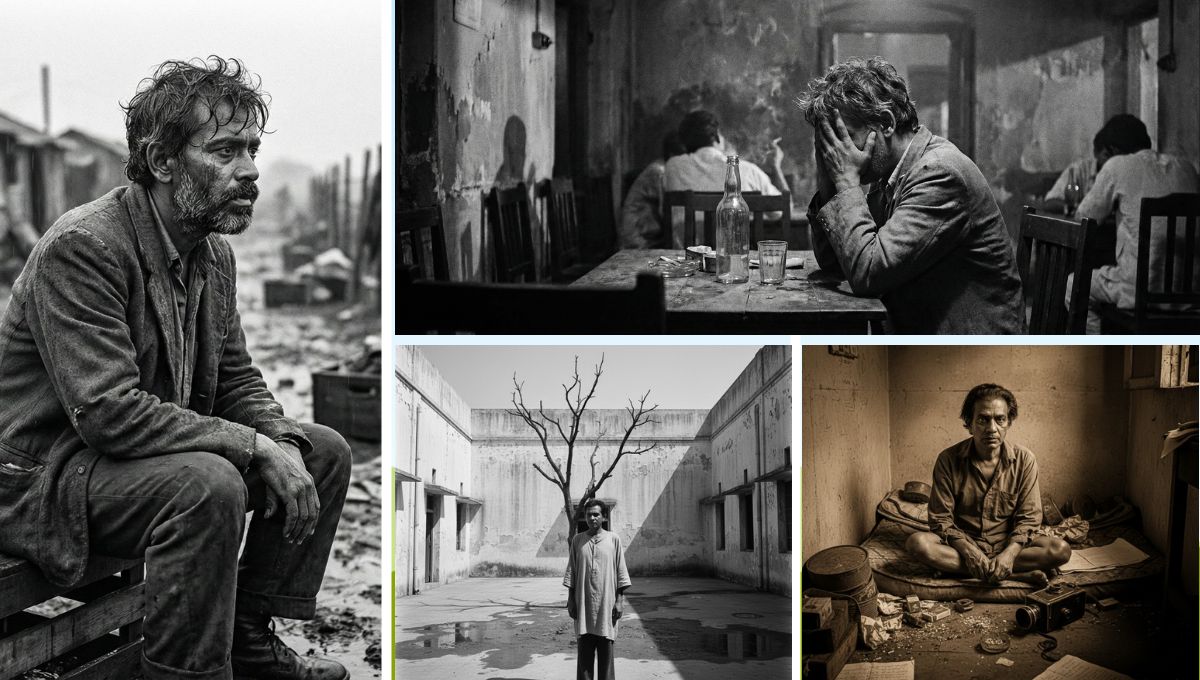
10 AI Gemini Prompts of Ritwik Ghatak: In Bengali and Indian movie history, Ritwik Ghatak’s name will always have a particular position. His personal life was the source of the suffering, reality, and experience he portrayed in his works. The stories from his life that are frequently unknown yet essential to comprehending him form the basis of this article.
Through Gemini AI, this report reveals the most authentic facets of Ritwik Ghatak’s life, highlighting his hardships, feelings, and traumatic events.
Childhood and Partition’s effects
Ritwik Ghatak was born in 1925. Despite his peaceful upbringing, the 1947 Partition of India had a profound impact on his life. He witnessed firsthand the suffering, starvation, homelessness, and insecurity of the people during Partition.
Later on, this experience took centre stage in his movies. In his films, displacement is a recurring theme.
Travelling from the theatre to the cinema
Ritwik began his career in theatre. He joined the Indian People’s Theatre Association (IPTA), which produced plays with social commentary.
He discovered through theatre that the primary purpose of art is to portray societal realities and suffering. He adhered to this notion even after he began producing movies.
Personal life challenges
Despite becoming a famous filmmaker, Ritwik had a challenging personal life. He experienced financial difficulties, irregular income, and health problems.
Even though he periodically struggled to meet even the most basic demands, he never compromised the integrity or message of his films.
Meghe Dhaka Tara: A fantastic movie inspired by genuine suffering
His most popular movie, Meghe Dhaka Tara, is still recognised as one of the greatest works of Indian cinema.
The movie’s lead character, Neeta, exclaimed, “Dada, I want to live,” which was both a clichéd phrase and a metaphor for Ritwik’s own suffering. The movie highlights societal suffering that is often ignored.
Subarnarekha: Struggle and Censorship
The movie Subarnarekha’s distribution was delayed because the censor board thought its subject matter was too harsh and frightening.
But Ritwik struggled for years without reaching a different conclusion. The film is now recognised as a seminal work of Indian parallel cinema following its eventual distribution.
Participation in film school
While teaching at FTII, Ritwik had a significant influence on a number of up-and-coming filmmakers. He explained to his students that the camera was an extension of the artist’s sensibility rather than merely a mechanical. Many of his students went on to become well-known in Indian New Wave cinema.
10 AI Gemini Prompts of Ritwik Ghatak’s That Capture Deepest Sorrows
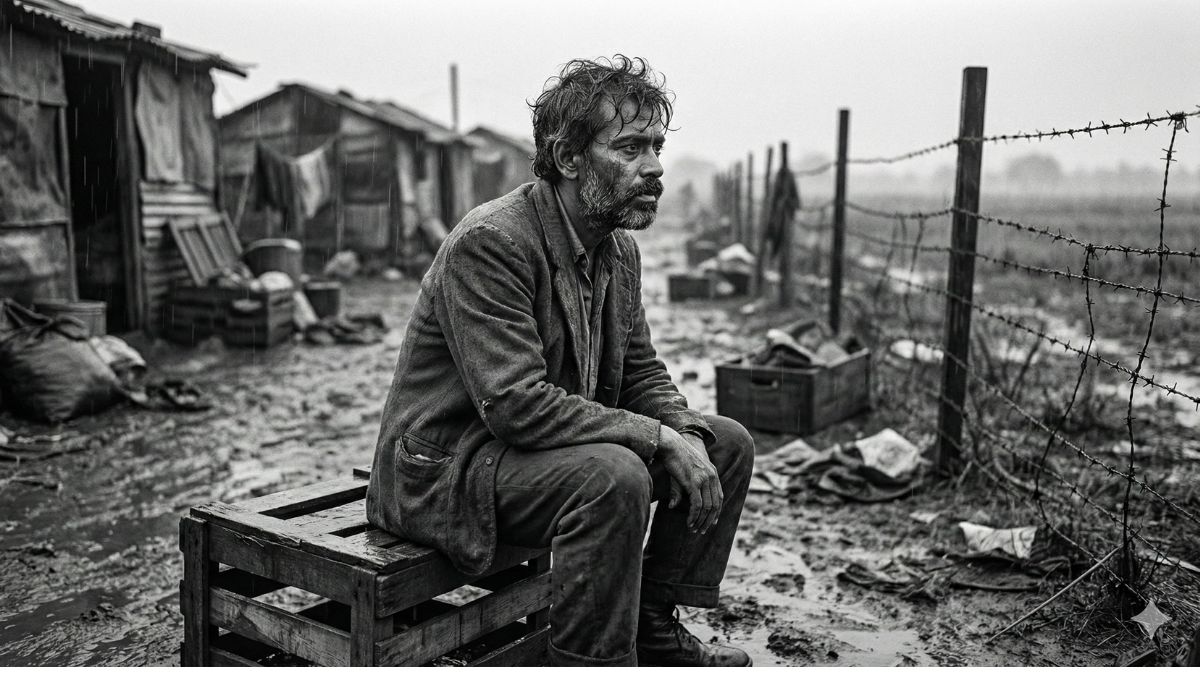
Prompt 1: The wound of Partition
Use this prompt
A gritty, monochrome photograph of filmmaker Ritwik Ghatak sitting hunched alone amidst the debris of a post-partition refugee colony in 1950s Calcutta. Rain streaks his face, his eyes are hollow with deep loss, looking towards a hazy, unreachable horizon across a barbed-wire fence. Film grain texture, somber atmosphere.
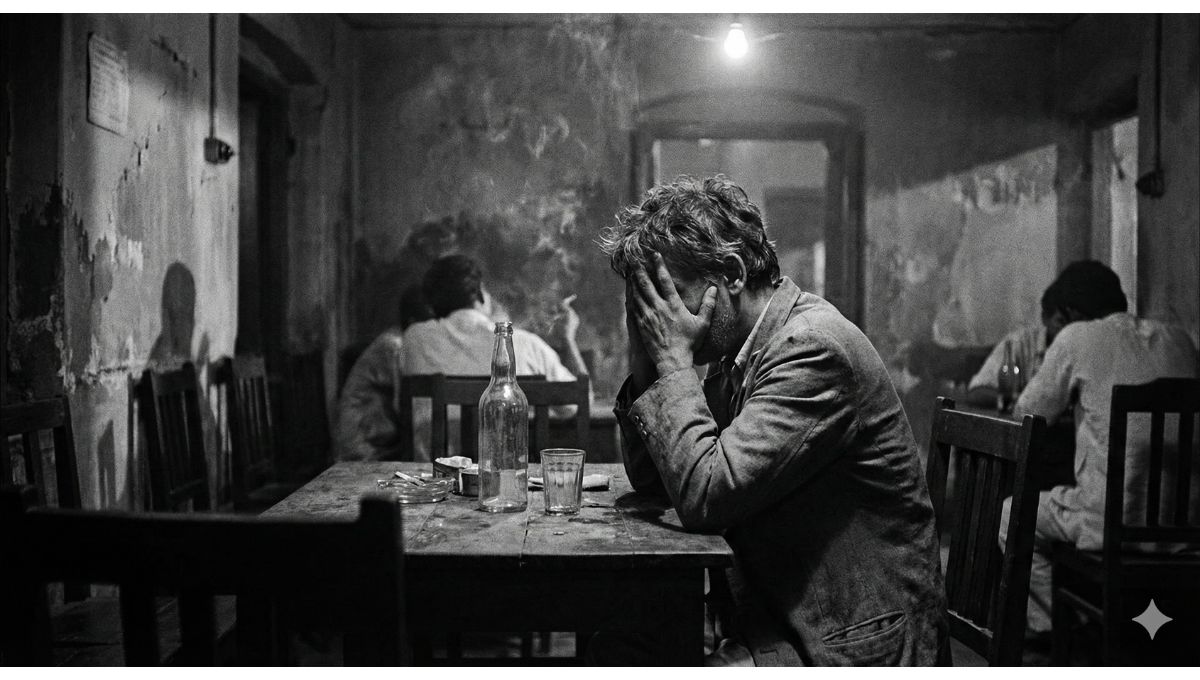
Prompt 2: Loneliness at the Tavern
Use this Prompt
A candid, melancholic portrait of Ritwik Ghatak in a dimly lit, smoke-filled, cheap tavern in 1960s Kolkata. He is solitary at a cluttered table with an empty bottle and a glass, head buried in his hands. Long, expressionistic shadows surround him, conveying existential despair. High contrast black and white film photography.
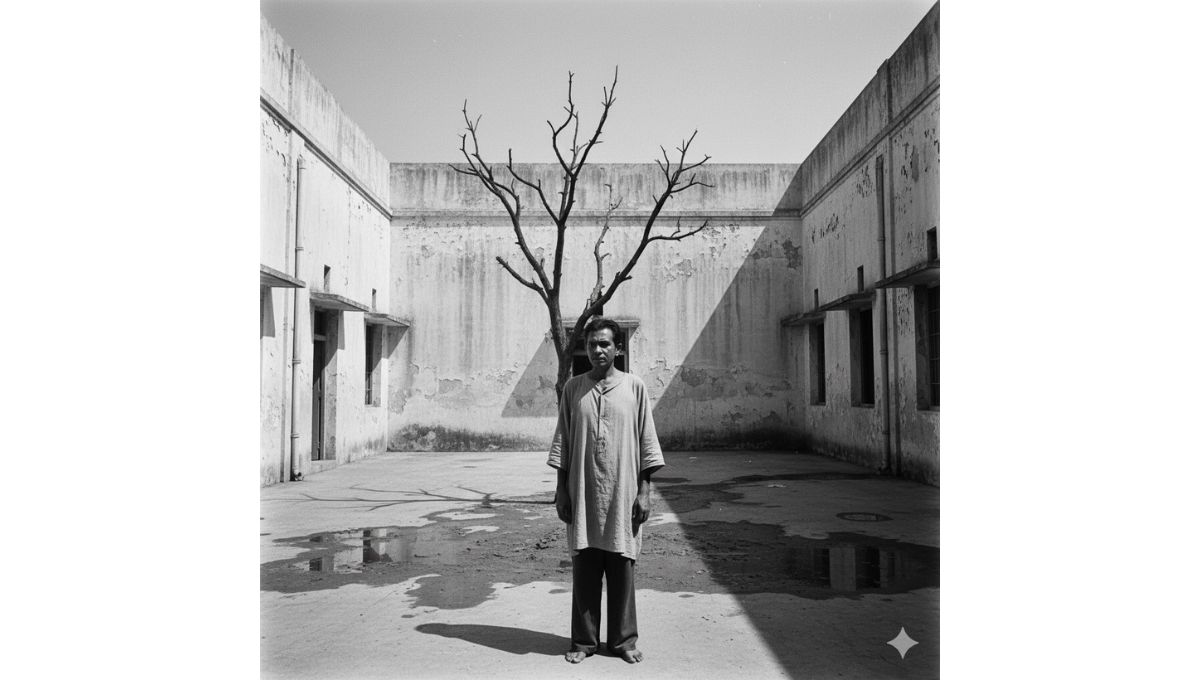
Prompt 3: The Asylum Days
Use this Prompt
A stark, unsettling image of Ritwik Ghatak confined within the high, peeling walls of a mental institution yard in the late 60s. He is wearing oversized hospital clothes, gazing vacantly at a dead, leafless tree. The lighting is harsh and unforgiving, emphasizing isolation and mental anguish. Documentary style monochrome.
Prompt 4: Dream of the Lost Padma
Use this Prompt
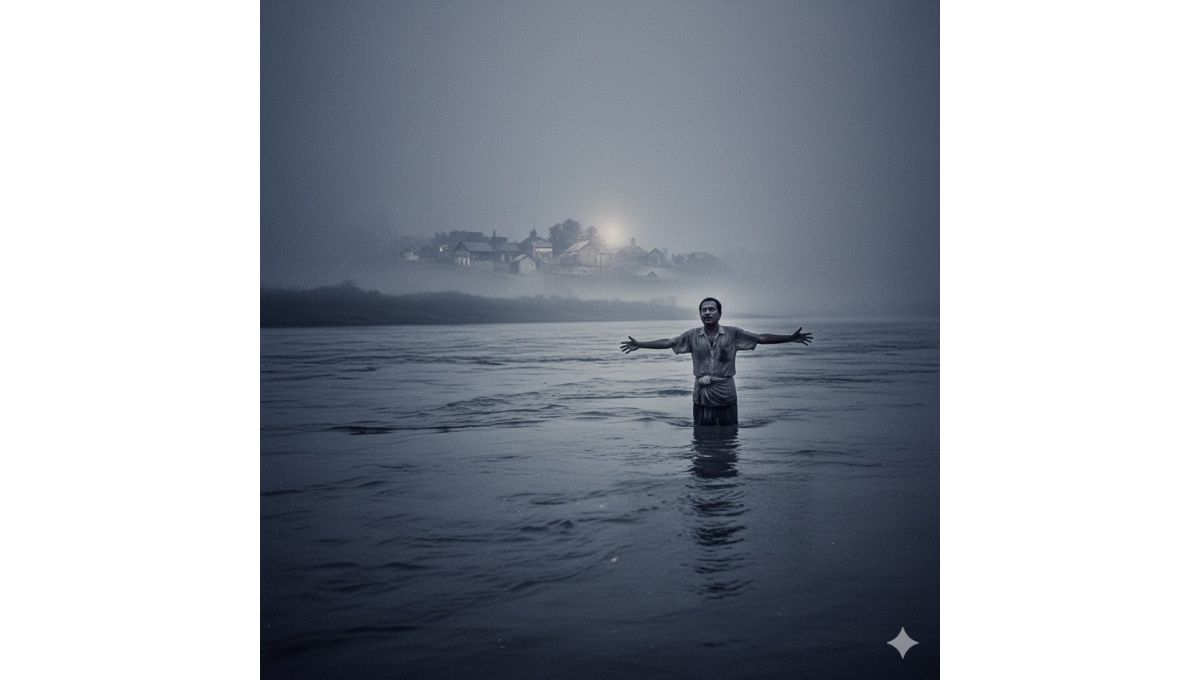
A surreal, dreamlike photograph of Ritwik Ghatak standing knee-deep in the silty, turbulent waters of a vast river at twilight. He is reaching out desperately towards a ghostly, fading mirage of a village on the other bank. The mood is one of deep yearning and eternal separation. Desaturated, muted colours.
Prompt 5: Poverty vs. Genius
Use this Prompt
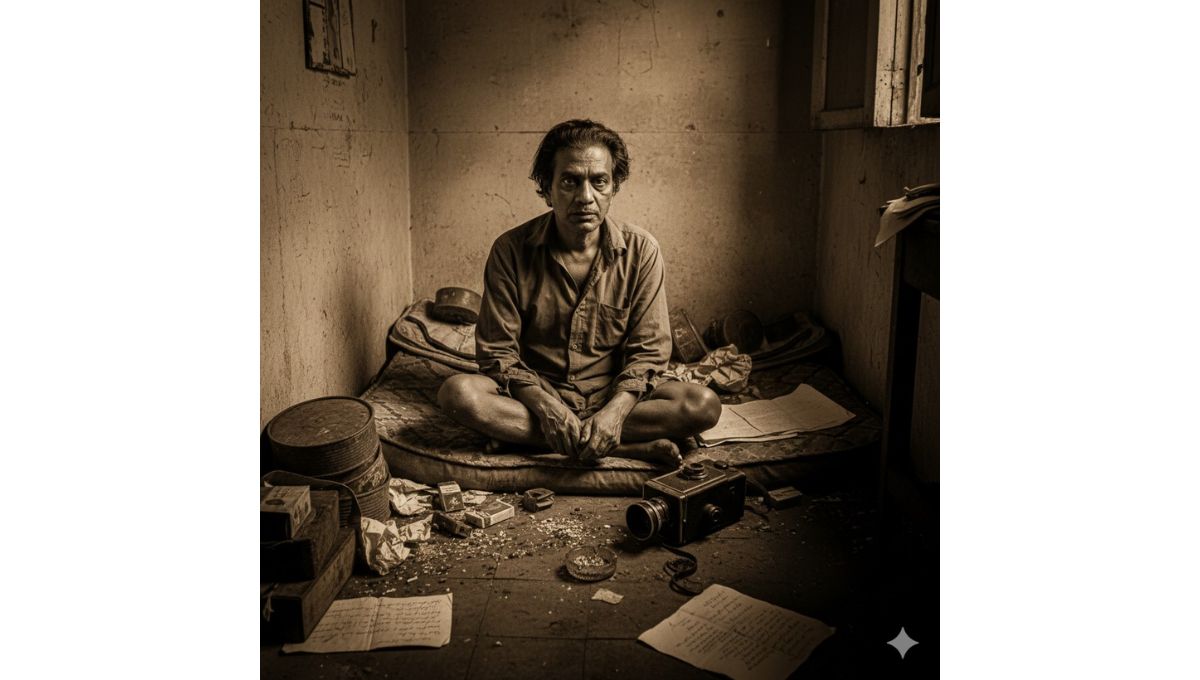
Inside a cramped, decaying room in Calcutta, a disheveled Ritwik Ghatak sits on a torn mattress surrounded by rusted film cans, scattered scripts, and cheap cigarettes. A broken film camera lies next to him. The abject poverty palpable contrasts with his intense, burning intellectual gaze. Sepia tone documentary style.
Prompt 6: The Internal Storm
Use this Prompt
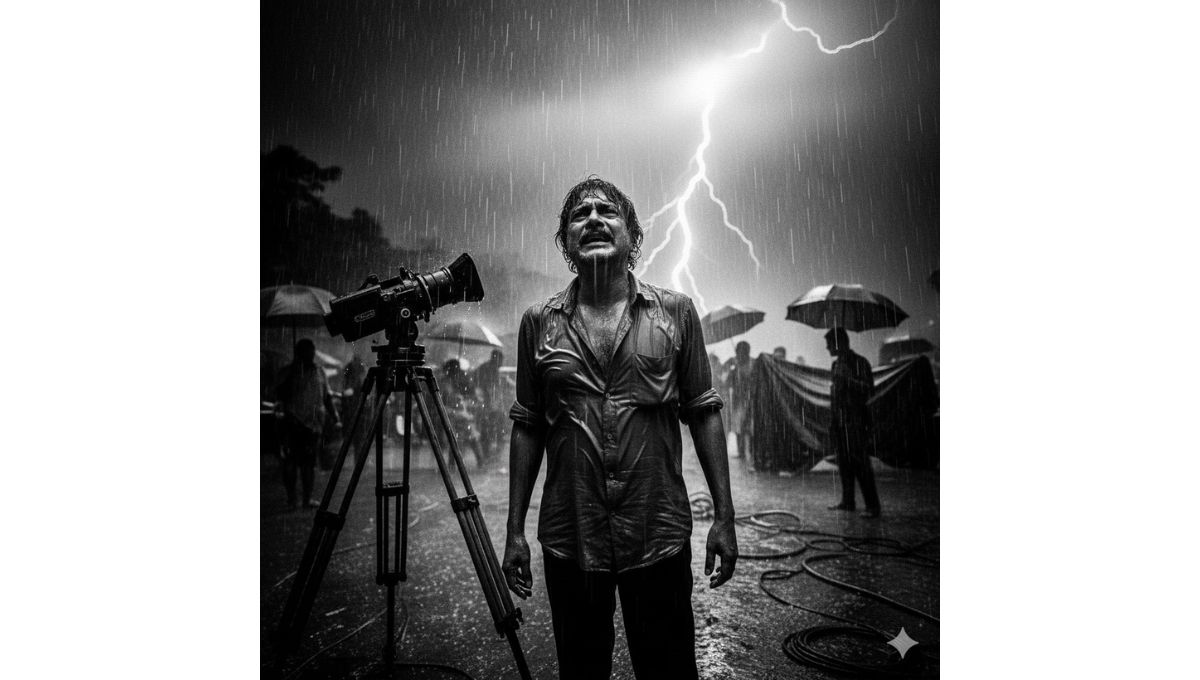
Ritwik Ghatak caught in a violent monsoon downpour on a chaotic film set, but looking not at the camera, but upwards at the stormy, lightning-filled sky with an expression of primal rage and grief. His clothes are soaked, hair wild. It represents his internal emotional turmoil. Dramatic, dark, high-contrast black and white.
Prompt 7: One with the Refugees
Use this Prompt
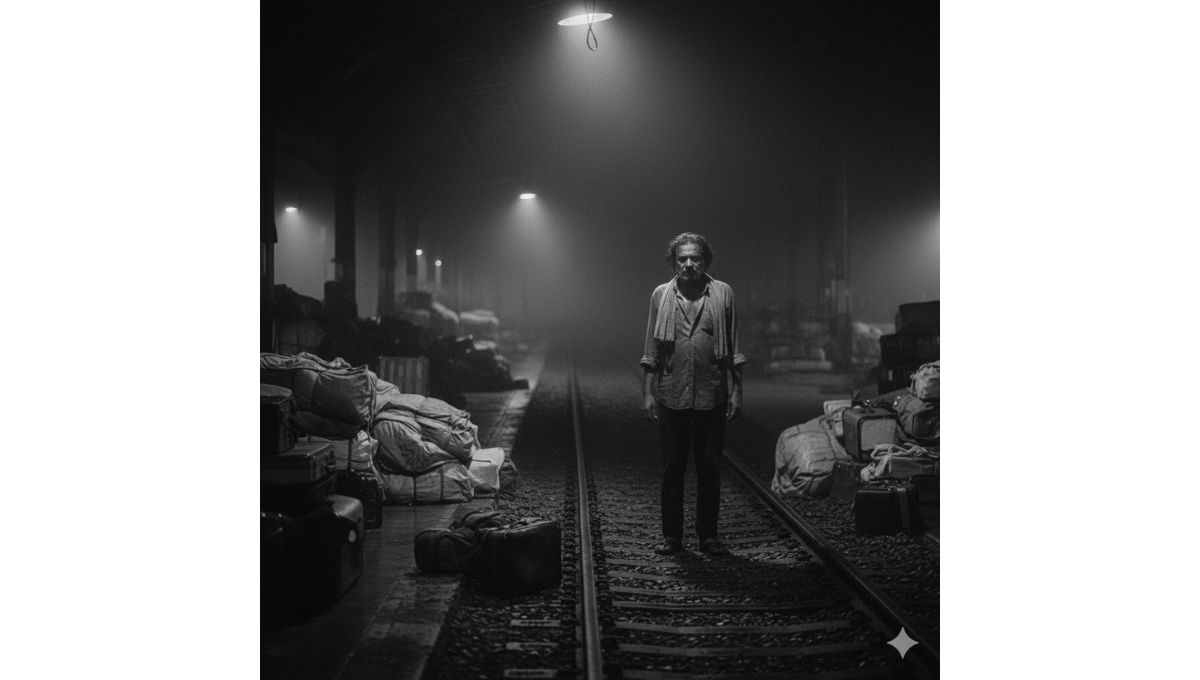
A cinematic, noir-style black and white photograph of Ritwik Ghatak standing alone on a misty, dimly lit railway platform at midnight. He is surrounded by stacks of rough bundles and makeshift luggage, symbolizing the presence of unseen refugees. He looks at the endless railway tracks disappearing into the dark with an expression of existential dread. Atmospheric lighting, heavy shadows.
Prompt 8: The Tormented Writer
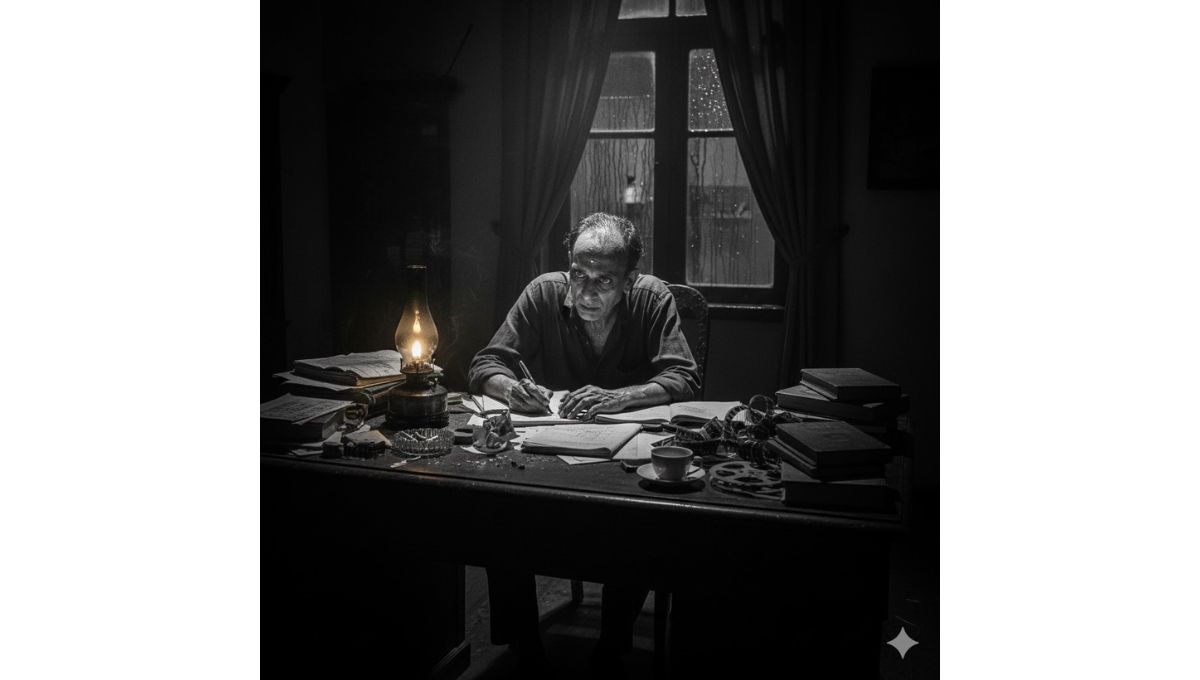
Use this Prompt
A lonely figure of Ritwik Ghatak working furiously at a cluttered desk late at night under the weak, yellow light of a kerosene lamp. Ashtrays overflow. He looks physically exhausted, sweating, but mentally possessed by a painful artistic vision he is trying to write down. The room is full of oppressive shadows. Film noir aesthetic.
Prompt 9: The Broken Bridge Metaphor
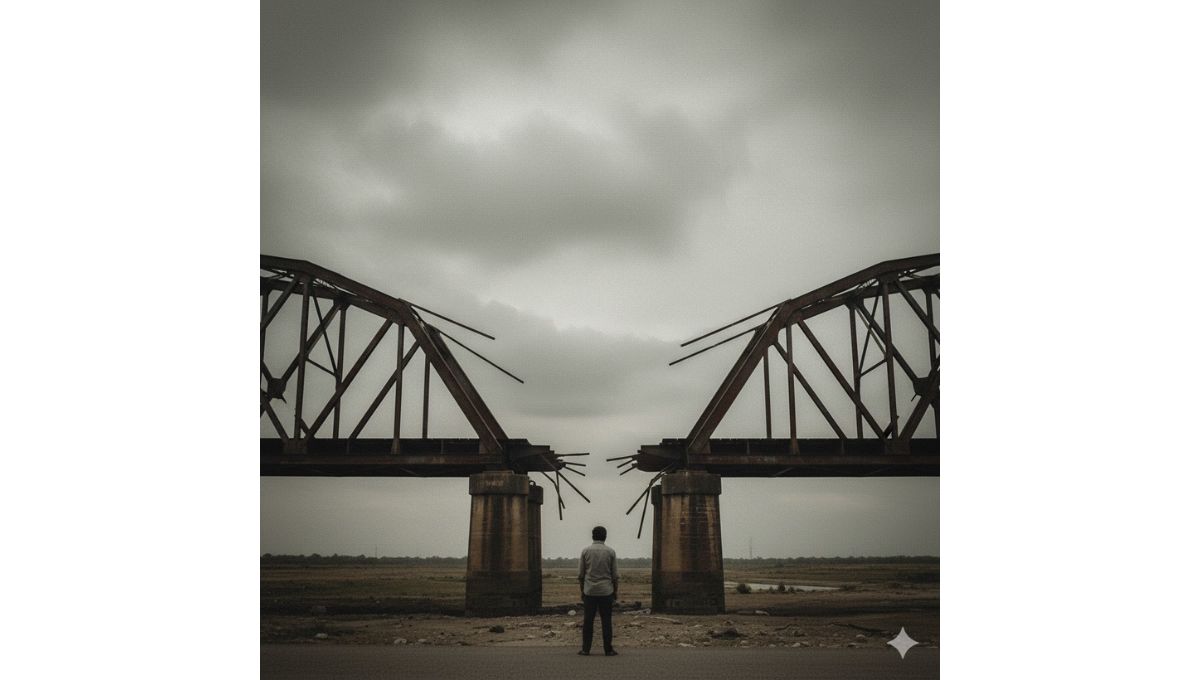
Use this Prompt
A metaphorical image of Ritwik Ghatak standing at the very edge of a massive, broken iron bridge spanning a dry riverbed. The bridge symbolizes the severed connection between the two Bengals. He looks diminutive against the industrial decay, his shoulders slumped in defeat. Somber, muted tones, cloudy sky.
Prompt 10: The Final Gaze
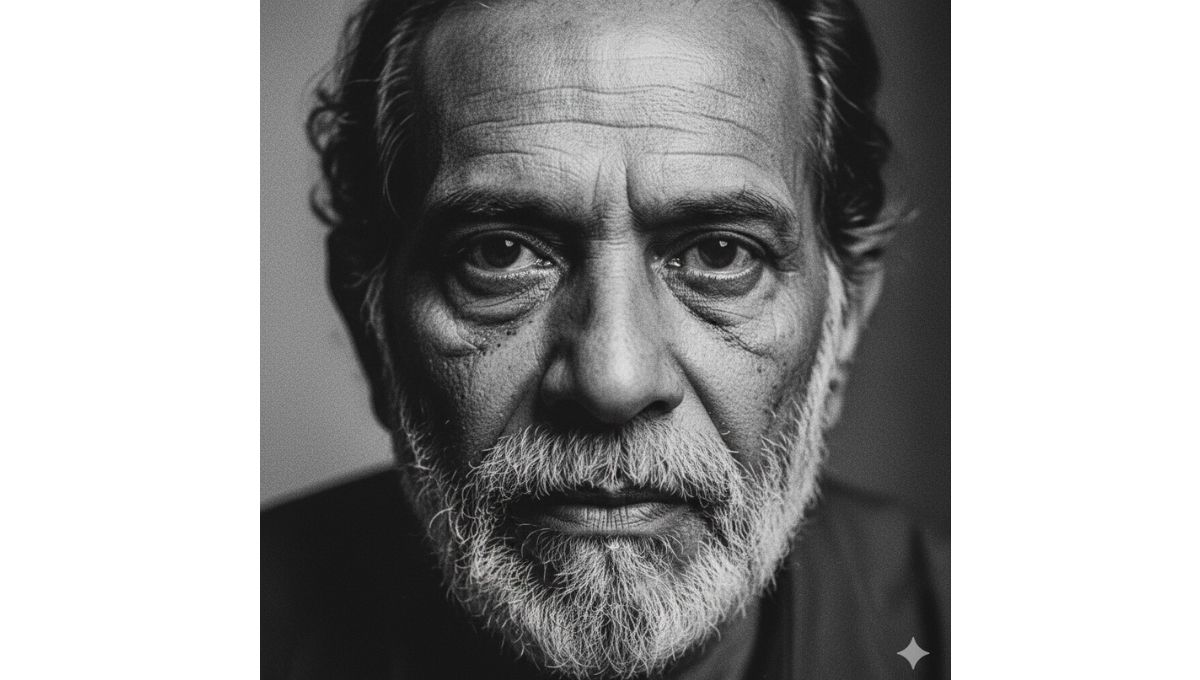
Use this Prompt
An extreme close-up portrait of an aging, sickly Ritwik Ghatak in the mid-1970s, shortly before his death. His face is ravaged by alcohol and illness, with rough stubble on his chin. His eyes look directly into the lens with an unsettling intensity that conveys a lifetime of accumulated sorrow, rebellion, and misunderstood genius. Intense texture, black and white film grain.
The source credited by Google Gemini AI
The years of loneliness
Ritwik did not get the recognition he so clearly deserved during his final years. Financial and mental challenges crippled him.
The complexity and significance of his films were not completely appreciated by the public until after his death in 1976.
Why does Ritwik continue to make headlines?
His films depict contemporary socioeconomic realities. In modern culture, themes like conflict, identity, and displacement are still important.
The younger generation is also discovering his work because to recent restorations, film festivals, and availability on OTT platforms.
Conclusion
Ritwik Ghatak’s life was marked by simplicity, suffering, and truth. Instead of only being a source of entertainment, he turned films into a voice of society. His artwork is as vibrant today as it was when he first produced it.
Also Read
5 Best AI Prompts Renowned Actor Suchitra Sen, Creative Concepts That Revived the Acting Career
Gemini 3 Benchmark Results: Outperforms GPT-5.1, New Visual Reasoning Preparation