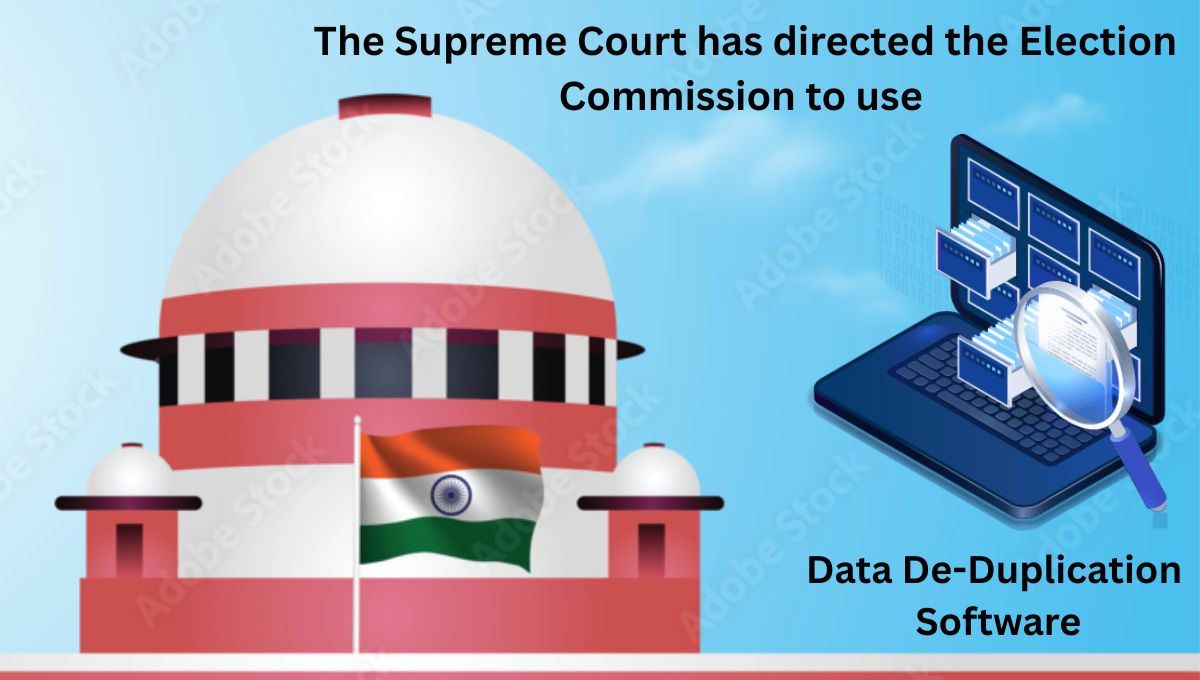
Supreme Court hearing on November 26: The Indian Election Commission should utilise de-duplication software to eliminate numerous names of the same individual from the voter list, the Supreme Court said on Tuesday, November 11. Justices Surya Kant and Joymalya Bagchi, who make up the bench, called the proposal “extremely useful https://www.sci.gov.in/ and necessary.”
The issue came up during a hearing on a petition that the Association for Democratic Reforms (ADR) had submitted. The NGO contended that the electoral process’s transparency is impacted when the same person’s name is registered more than once. The court recognised that this issue may be resolved by software-based verification.
This procedure will maintain the accuracy of the voter’s identity while also improving the process of updating the voter list.
Concerns Regarding Citizenship Verification: Commission Restrictions in the SIR Procedure
The Election Commission is not authorised to decide citizenship during a Special Intensive Revision (SIR), the ADR informed the court. This role belongs to the Home Ministry, according to Prashant Bhushan. “If the ECI has this power, it can use it; if not, it will not,” Justice Surya Kant responded. At the final hearing, this matter will be resolved.
In West Bengal and Tamil Nadu, where the names of millions of voters are presently being checked, this issue is especially pertinent. Voter lists nationwide may be impacted by this issue since it is closely related to constitutional rights and the citizen identification process.
Request receipt of the voter enumeration form
ADR filed an appeal with the Supreme Court to mandate that each citizen receive an acknowledgement slip upon submitting a voter enumeration form. As of right now, several states do not submit the forms to their websites; thus, citizens are unable to verify that they have filled them out.
The Election Commission has been asked to respond to the Supreme Court regarding this issue. According to the court, this is an essential measure to guarantee “transparency and trust in democracy”. Every citizen would have unambiguous documentation of their voting status if this clause were put into effect.
Data security vs transparency in the discussion of machine-readable voter lists
The Election Commission was encouraged by the ADR to provide a machine-readable version of the 2002 voter list so that individuals may look up their parents’ names. But Justice Joymalya Bagchi voiced worries about data security and privacy.
“Indian citizens collectively own data. It is confidently handled by the Election Commission. Third parties may obtain machine-readable data, he stated. Additionally, Justice Bagchi proposed granting password-protected access to all citizens so that only their personal information is accessible.
This discussion may serve as a crucial illustration of how India strikes a balance between privacy and digital transparency.
“Locking the house is essential” is the Supreme Court’s statement regarding data security.
When Prashant Bhushan questioned why the ECI couldn’t make the voter list machine-readable if individuals could, Justice Bagchi responded, You lock your house even after you close it. Do you keep it open because of that?
This claim emphasises how crucial data security is in the digital era. Transparency is just as crucial as citizen privacy, as the Supreme Court’s opinion shows.
Supreme Court hearing on November 26
The Supreme Court may make a decision about the SIR procedure, data security, and voter list correction when the case is heard again on November 26. In addition to being a technological innovation, this example suggests a new path for democratic accountability and trust. India’s entire voter verification system may change if the court rules in favour of ADR.
This Supreme Court hearing demonstrates that in Digital India, security and transparency should coexist. Voter confidence would increase, and the nation’s democratic process would be strengthened if the Election Commission of India employed technology responsibly.
Disclaimer: This article’s only goal is to inform. The data presented is derived from the Supreme Court public proceedings. It does not reflect the official viewpoint of any person or group.
Also Read
How to Fill the SIR Form for West Bengal Voter List Update 2025, Full Process Explained
Election Commission Big Update 2025: Add Your Name to the Voter List Without Any Documents!
SIR Form Filling Process 2025 for Married Women, Clear Guidelines