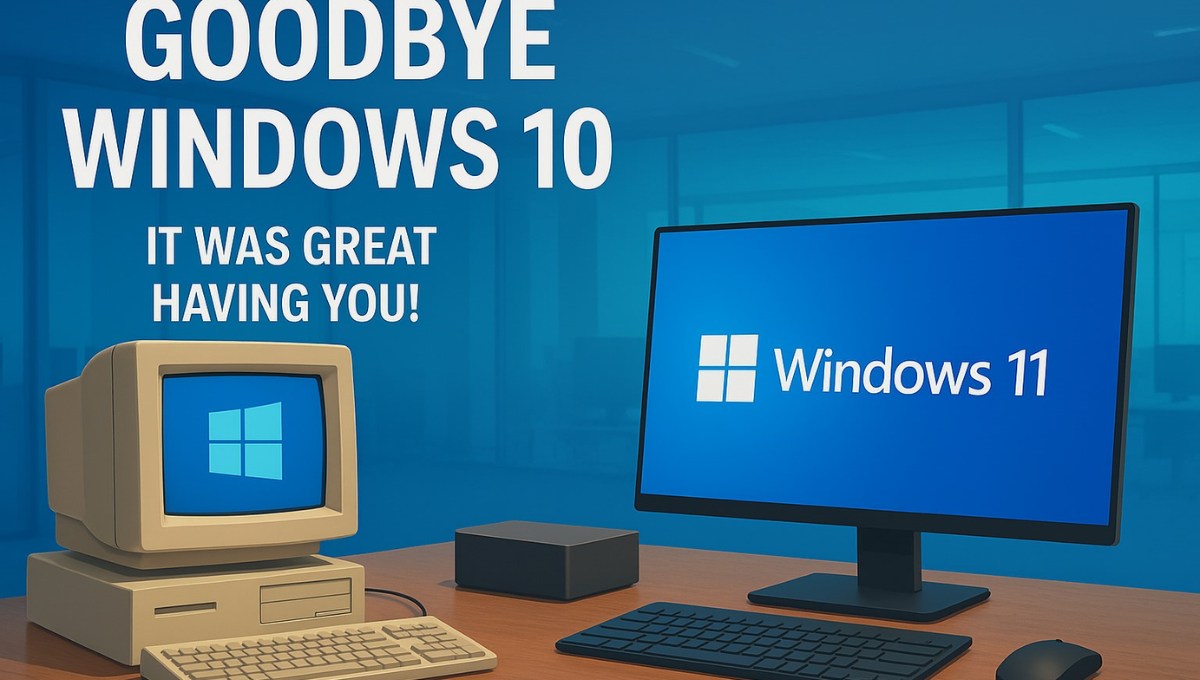
Goodbye Windows 10: After nearly a decade of loyal service, Microsoft is officially saying goodbye Windows 10. Starting from October 14, 2025, the company will end all updates, security patches, and technical support for one of the most widely used operating systems in history.
This marks not only the end of an era for millions of users but also a turning point in the world of personal computing.
Windows 10: A Decade of Dependable Computing
Launched in July 2015, Windows 10 quickly became a trusted platform for both individual and business users.
It combined the simplicity of Windows 7 with the modern design of Windows 8, creating a balanced experience that users loved. For nearly ten years, it remained stable, user-friendly, and efficient, making it the preferred choice for millions around the world.
However, as technology evolved and Microsoft pushed forward with Windows 11, it was only a matter of time before the company decided to close the chapter on Windows 10.
Goodbye Windows 10 After October 14, 2025?
If you are still using Windows 10, the end of support might sound worrying, but your computer will not stop working. You will still be able to use your PC normally.
However, from October 14, 2025, Windows 10 will no longer receive any security updates, feature improvements, or technical assistance.
This means your device will become more vulnerable to cyber threats, viruses, and malware over time.
Microsoft has clearly stated that it will not fix any security flaws found after the deadline. Essentially, the system will remain functional but unprotected.
Why Microsoft Moved to Windows 11
When Windows 10 was launched, Microsoft famously said it would be the “last version of Windows.” The company planned to enhance it through continuous updates.
But the rapid progress of technology, particularly in AI integration, security advancements, and design innovation, led to the creation of Windows 11 in 2021.
Windows 11 introduced several major upgrades, including a modern interface, improved system security, and AI-powered features, making it more compatible with the future of computing.
The Hardware Barrier Problem
One of the biggest challenges for users is hardware compatibility. Windows 11 requires specific hardware features such as TPM 2.0 and newer generation processors, which many older PCs do not have.
As a result, millions of computers manufactured before 2015 cannot support Windows 11. This leaves users with limited choices, either upgrade their hardware or buy a new PC. For many, both options are expensive and inconvenient.
Extended Security Updates: Only for Businesses
While Microsoft is ending general support, it has introduced the Extended Security Update (ESU) programme for corporate customers. This allows businesses to pay for additional security updates for up to three years beyond the official end of support.
Unfortunately, this service is not available for home users. This means that ordinary users will face greater security risks if they continue using Windows 10 after 2025.
The Global Impact: Millions of PCs May Go to Waste
A recent report by Canalys Research suggests that nearly 240 million computers worldwide could become obsolete once goodbye Windows 10. Many of these devices might end up in landfills, significantly contributing to the global electronic waste (e-waste) problem.
Currently, the world produces around 50 million tonnes of e-waste annually, a large portion of which comes from outdated computers and smartphones.
The end of Windows 10 could increase that number dramatically, worsening the environmental crisis and creating new sustainability challenges.
A New Chapter for Technology and Sustainability
Experts believe Microsoft’s decision will temporarily boost PC sales as people rush to upgrade. However, it will also raise concerns about affordability, sustainability, and waste management.
The end of Windows 10 symbolizes more than just a software change, it highlights how quickly technology evolves and how essential sustainable digital practices have become.
The retirement of Windows 10 is both emotional and inevitable. It represents the close of a generation that shaped the modern computing experience.
As we move toward the AI-driven world of Windows 11 and beyond, one thing becomes clear, technology may advance fast, but sustainability and security must advance with it.
Disclaimer: This article is for informational purposes only. All facts and timelines are based on Microsoft’s official announcements and verified research data. Readers are advised to verify hardware and security compatibility before upgrading or making changes to their systems.
Read More:
Amazon Great Indian Festival 2025: Steal Deals on the Best Wireless Headphones
Diwali Sale 2025 Brings Huge Discounts on iPhone 16 & iPhone 17, Don’t Miss These Offers
From Words to Viral Images: Microsoft’s MAI-Image-1 Explained